Grammarly Wanted to Fix My “From-Scratch Pantry.” It Was Wrong.
I recently wrote a phrase that Grammarly did not like: “from-scratch pantry.”
The context was clear. I was talking about making things from scratch: sauces, breads, pickles, condiments, etc. The kind of pantry where nothing comes from a jar or a box, where everything is made by hand.
Grammarly suggested a correction. It wanted me to change “from-scratch pantry” to “pantry from scratch.”
Wait. Isn’t that a completely different sentence?
A “pantry from scratch” sounds like a DIY carpentry project. Grab some wood, nail it together, and suddenly you have a place to store your cans. That isn’t what I meant. I wasn’t building a closet. I was cooking.
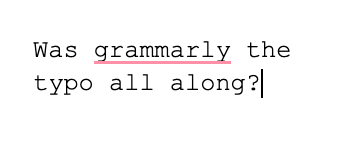
What Grammarly Missed
Grammarly is good at catching typos and comma splices (sometimes). It is less good at understanding what you actually mean.
The phrase “from-scratch pantry” is not standard. I knew that when I wrote it. I used it anyway because it was the most concise way to say “a pantry stocked with things made from scratch rather than bought at the store.”
Grammarly doesn’t understand context. It doesn’t understand voice. It doesn’t understand that breaking a rule on purpose is sometimes the right move.
It only understands patterns. And "pantry from scratch" appears in more sentences across the internet than “from-scratch pantry.” So Grammarly assumed the more common pattern was the correct one.
But it was wrong.
Why This Matters
If you rely on Grammarly to edit your writing, you are trusting a tool that doesn’t understand what you’re trying to say. It will flag your intentional choices as errors. It will suggest changes that alter your meaning. It will make your writing more correct and less you.
That’s fine for an internal email. It’s not fine for a blog post, a website, or anything a customer will read.
What a Human Editor Does Differently
A human editor reads for meaning, not just rules.
When I see something like “from-scratch pantry,” I don’t flag it as an error. I understand it. I might have asked if you wanted to clarify, but I would not have changed it to “pantry from scratch” because that means something else.
A human editor knows when to leave a sentence alone. Grammarly doesn’t.
The Bottom Line
Grammarly is a tool. It’s useful for catching typos and basic mistakes. But it’s not a replacement for a human editor. A human editor reads your words, understands your meaning, and helps you say what you actually mean. Grammarly just follows the rules.
Sometimes breaking the rule is the point.
