Fahrenheit 451 and the Value of What You Write
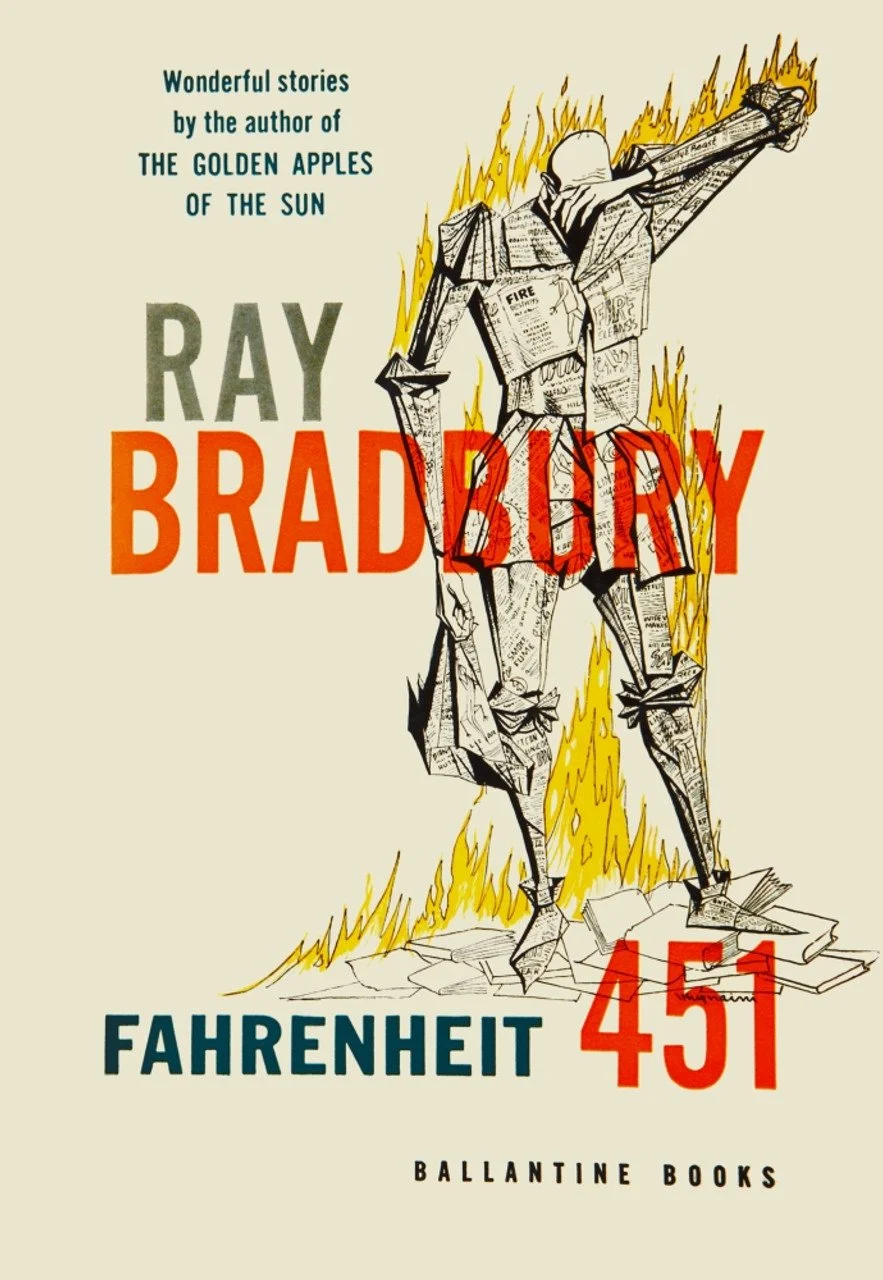
I first read Fahrenheit 451 as a teenager and understood it as a book about censorship. The government burned books. That was the horror. But I reread it recently while watching the internet fill with AI-generated listicles, formulaic content, and brands shouting into a void, and I realized I had missed the point.
Bradbury was not only writing about censorship. He was also writing about indifference.
In the novel, Guy Montag burns books for a living. But the society he lives in didn’t ban books through force. It abandoned them through neglect. People stopped reading because it was easier not to. The firemen became necessary only after the culture had already decided that depth was not worth the effort.
What We Lose When We Stop Trying
There’s a moment in the book where Montag meets Clarisse, a teenager who actually talks to him instead of staring at the wall-sized television screens that fill her family's home. She asks him if he’s happy. It’s the first time anyone has asked him that. He laughs and then realizes he is not laughing because something is funny. He is laughing because he doesn’t know how to answer.
That moment stuck with me because of how quiet it was. It’s the moment a person realizes that the tools they have been given for understanding their own life aren’t enough.
I see this in marketing all the time. Brands produce content because they’re told they should. Blog posts, social media captions, email newsletters. They check the box. The words are technically correct. But there is no sense that anyone actually tried to say something worth reading. The writing exists because it is supposed to exist, not because it serves the reader.
The Cost of Cheap Words
Bradbury understood that when words stop mattering, something deeper erodes. The people in Fahrenheit 451 are not unhappy in a dramatic way. They are vaguely hollow. They drive fast, watch screens, and take pills to calm the anxiety they cannot name. They have everything they were told to want and nothing they actually need.
This is what happens when the only writing we produce is transactional. When every email is a sales pitch, every blog post is SEO fodder, and every social caption is designed to game an algorithm. The words become noise. And the reader learns to tune out.
Montag spends the second half of the novel running from the life he used to live. He joins a group of outcasts who have memorized books so the knowledge survives. They walk through the wilderness reciting passages to each other because they believe the words are worth keeping alive.
Writing Like It Matters
I don’t think most copywriting needs to rise to the level of literature. But I do think it needs to rise to the level of respect. The reader is giving you their attention. That’s a finite resource. If you waste it, you don’t get it back.
I try to write with the assumption that what I am saying matters enough to be said carefully. I cut words that don’t work. I rewrite sentences that feel lazy. I ask myself whether I would read this if someone else had written it. If the answer is no, I start over.
Fahrenheit 451 ends with Montag walking toward a city that has just been destroyed by war. He doesn’t know what comes next. But he has memorized the Book of Ecclesiastes, and he carries it with him because he believes that words might help the survivors build something better than what was lost.
That’s what writing is supposed to do. Not to save the world but offer it something worth holding onto. If you are not trying to do that, why should anyone read what you write?
I am currently looking for a copywriting role where I can bring this level of care to brands that believe words still matter. If that sounds like something you need, view my portfolio or reach out. I would love to talk about what thoughtful writing looks like for your brand.