The Copy & Craft Blog

Featured Travel Blogs
All Blogs

Localization is More Than Changing Colour to Color
Most people think localization means swapping British spelling for American or changing “lift” to “elevator.” That’s the shallow version, and it’s what most agencies offer. Real localization goes much deeper. It means understanding what a reader expects from a piece of copy based on where they live, and it means knowing that a word-for-word translation often misses the point entirely.

Driving Around the World Taught Me to Write for Different Audiences
I’ve held driver’s licenses in the United States, Thailand, and Germany. I’ve driven on highways and back roads in twelve countries across four continents. Every time I get behind the wheel in a new place, I learn the same lesson all over again. The rules are written down, but the real education comes from what no one tells you.

A Cooking Teacher in Bali Taught Me How to Preserve Voice
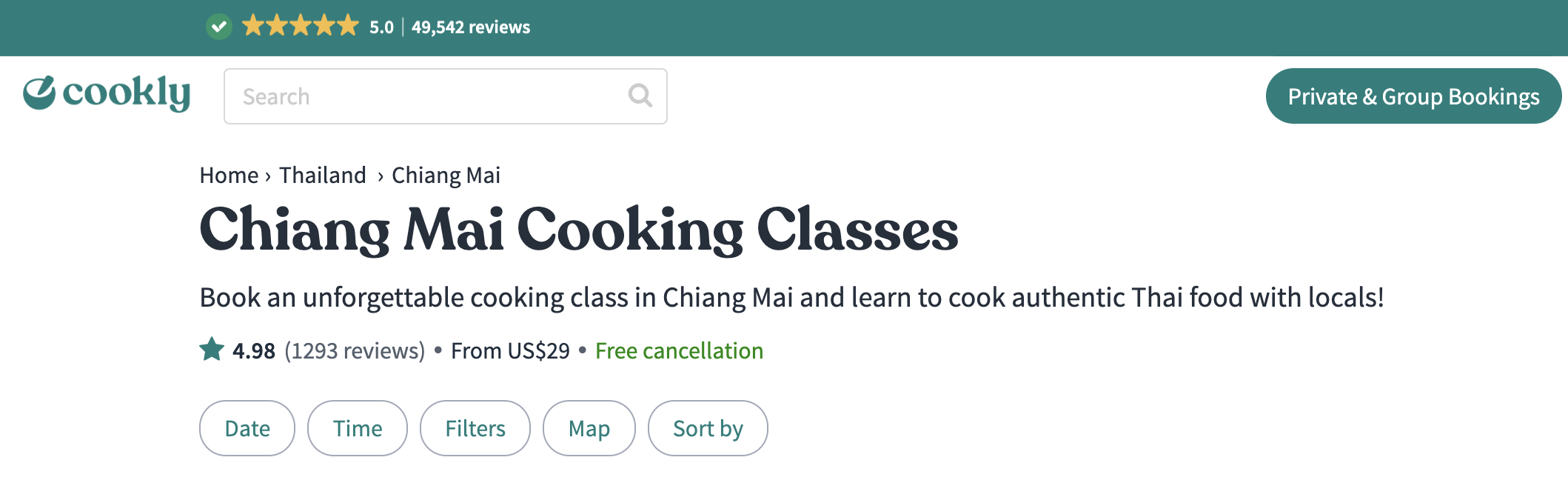
At Cookly, I edited booking pages for cooking classes and food tours all over the world. A teacher in Bali would fill out a questionnaire about their class, and I would turn their answers into a polished booking page. A lot of the grammar needed work, but the voice was always there from the beginning. My job was to clear the path, not to build a new road.

Reading About Three Countries Taught Me to Research Any Industry
Before moving to different countries, the author read local literature to gain a deeper understanding of each culture. This approach enhanced their experiences in Thailand, Germany, and China, revealing insights beyond surface-level knowledge. The author emphasizes that thorough research while writing builds trust with clients and improves the quality of the work produced.

What Language Apps Taught Me About Copy
I’ve been learning Chinese through group classes, private lessons, and apps over the last few years, and each tool works differently because each tool serves a different kind of need. Copywriting has the same problem.

Same Same But Different: A Lesson in Positioning
Thai sellers have a wonderful phrase for tourists who are comparing products. It’s the most honest marketing I’ve ever heard, and most brands could learn something from a street seller in Bangkok.

The German Train Problem: Why Punctuality Is a Promise, Not a Reality
Germans have a reputation for punctuality that precedes them almost everywhere in the world. Ask anyone (not in Germany) about German stereotypes and you will hear it within the first few answers. German trains run on time. German people arrive early. And German efficiency is legendary. It is a brand promise that the reality frequently fails to meet.

Learning Chinese Taught Me How to Write for People Who Don't Speak Your Language
When I started learning Chinese, I couldn’t say very much. I knew a few random nouns and verbs and could count to 10. There was no way I was building a sentence. But living in Shanghai, I learned something surprising. A single correct word, placed correctly, worked better than a dozen guessed ones. “Water” got me water. “Bathroom” got me pointed in the right direction. “Zhège” while pointing to a menu got me fed. The precision mattered more than the quantity of words.

Reading Foreign Novels in English as a Copyeditor
When you read a translation, you notice the seams. A slightly unnatural phrase catches your eye. A sentence that feels too American for a Japanese novel makes you pause. A word choice that seems odd forces you to reread. As you’re reading, you’re watching someone work. That awareness is the core skill of copyediting.

What Translators Know About Tone That Most Copywriters Don't
A translator sits with a sentence in Korean, Japanese, or Italian and faces a hundred possible English versions. One is literal. One captures the rhythm. One preserves the emotional weight. The translator cannot have all three so a choice has to be made. Copywriting requires the same trade-offs.

Learning Jazz Changed How I Think About Sentence Length
For the last year, jazz has been my project. Miles Davis. John Coltrane. Thelonious Monk. Bill Evans. I have been working through the history of the genre, trying to understand what makes it work. Jazz taught me that variation gives the reader room to feel the words instead of just processing them.

James Joyce's Punctuation (and Lack Thereof)
James Joyce does things with punctuation that should not work. Long stretches of prose with no periods. Sentences that start without capitals. Dialogue that runs into narration without quotation marks. A copyeditor would have a heart attack. The writing works. The punctuation choices make it work.

Being a Copywriter Means Learning to Play Any Room
Over the years, I have played piano in churches, rock bands, country bands, and folk groups. Each genre has its own vocabulary, its own rules, its own expectations. You do not play a rock song the same way you play a hymn. You do not comp chords for a country singer the same way you solo over a jazz standard. My job as a copywriter is the same.

What My Year of Listening to Jazz Taught Me About Editing
Miles Davis built a career on playing less. While other trumpet players filled every bar with notes, Davis would hold a single note and let it hang in the air. He trusted that one note, held long enough, could say more than a hundred fast ones. Editing copy is the same discipline.

Why Pop Music Made Me a Better Copywriter
For years, pop music was something I dismissed. Too simple. Too polished. Too eager to please. Then I started paying attention. Copywriting works the same way.

The Best Travel Advice is Also the Best Copywriting Advice
Someone once told me that the secret to travel is to stop trying to see everything and start trying to actually be somewhere. When I write copy, I ask myself the same question I learned to ask about travel. Are you trying to be everywhere at once? Or are you actually trying to be somewhere?

Lost in Translation: Why Direct Copy Never Works
I’ve spent enough time in countries where I don’t speak the language to know that Google Translate is a liar. It will give you words. It will not give you meaning. A direct translation might be technically correct, but it almost never lands the way you want it to. Meaning lives in context, in tone, in the gaps between words. What works in one language often sounds hollow or strange when carried straight across.

The Catcher in the Rye and Why Customers Hate Fake Voices
I have a complicated relationship with The Catcher in the Rye. I read it at seventeen, the right age, and I found Holden Caulfield insufferable. I read it again at thirty, and I found him heartbreaking. But one thing has not changed across either reading. He is right about the phonies.

Three Countries, Three Languages, and One Lesson About Brand Voice
I have lived in Thailand, Germany, and China. Nine years across three countries, where I arrived speaking almost none of the language each time. You learn quickly that communication is not about knowing the right words. It is about reading the room.

Fahrenheit 451 and the Value of What You Write
I first read Fahrenheit 451 as a teenager and understood it as a book about censorship. The government burned books. That was the horror. But I reread it recently while watching the internet fill with AI-generated listicles, formulaic content, and brands shouting into a void, and I realized I had missed the point.
The line between authentic destination insight and obligation-driven marketing keeps getting blurrier. Between hosted press trips, sponsored itineraries, and content quotas, it’s easy for travel writing to feel manufactured. I recently shared a reflection on Substack about how I balance a career in travel copywriting with personal exploration.