The Rhythm of a Sentence, or What 25 Years of Piano Taught Me
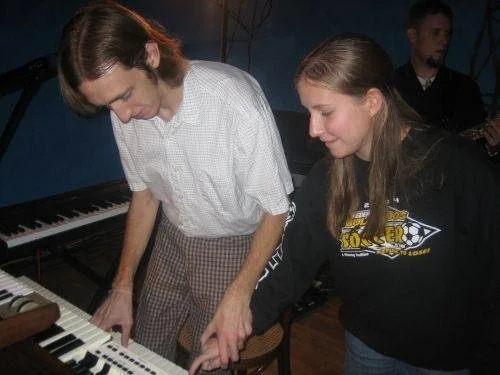
Bringing Halie on stage during a performance, October 2008
I’ve been playing piano since I was five years old. That’s over twenty-five years of sitting in front of a keyboard, learning how to make my fingers do what my ears expect to hear. I’ve played in churches, rock bands, country bands, and folk groups. Each genre has its own rhythm. A hymn moves differently than a rock song. A country ballad breathes differently than a folk tune. They use the same handful of notes, but the rhythm changes everything.
Copywriting is the same instrument played in different rooms.
The Rhythm of a Sentence
Read these two sentences out loud. "Short sentences create tension. They move fast. They make the reader lean in." Now read this one. "A longer sentence follows, releasing that tension, letting the reader breathe, giving the brain a moment to rest before the next short sentence lands." Do you feel the difference? The short sentences feel urgent. The long sentence feels calmer. The rhythm of your writing changes how the reader feels, not just what they understand. Musicians call this dynamics. Writers call it pacing. Same concept.
Twenty-five years of piano taught me that the space between notes is just as important as the notes themselves. A rest creates anticipation. It gives the listener time to process. It makes the next note land harder. In writing, punctuation does the same job. A period is a rest. A line break is a breath. A well-placed comma is a slight pause before continuing.
What Playing in a Rock Band Taught Me
In a rock band, you don’t play every note. You lay back. You hit a chord. You stay silent for two bars. The silence makes the next chord hit harder.
Most inexperienced writers do the opposite. They fill every gap with more words, more adjectives, more clauses. The result is exhausting and the reader feels trapped. A good writer knows when to leave space. A short sentence after a long paragraph. One word alone on its own line. A period where a comma would be correct.
Silence is not empty. It’s active. It gives the reader time to process what just happened. Twenty-five years of piano taught me to listen for the silence. The same ears that hear when a band is rushing or dragging also hear when a paragraph is cluttered or breathless.
What Playing in a Church Taught Me
In a church, you play with more space and a softer touch. You are not the center of attention. You support the voices singing above you.
Copywriting is the same. You aren’t the star. Your client is. Your product is. The reader is. Your job is to make them sound good, not to show off your vocabulary. The best musicians I’ve played with are not the fastest or the most technically proficient. They’re the ones who listen. They hear what the song needs and give it exactly that, nothing more. The best writers I know do the same thing. They read the room. They hear the audience. They write the sentence that belongs there, not the one they wish they could write.
Your Turn
Read something you wrote recently. Read it out loud. Where do you naturally pause? Where do you speed up? Where does the rhythm break? If it feels off, you don’t need new words. You need a new rhythm. Twenty-five years of piano taught me that. The same hands that play the notes also write the sentences. The same ears that hear the music also hear the words.
