When foreign tourists step off the plane in the United States, they often expect the big landmarks. They anticipate seeing the Statue of Liberty, the Grand Canyon, or the neon signs of Times Square. Yet, the moments that stick with travelers are often the subtle daily habits that local residents take for granted.
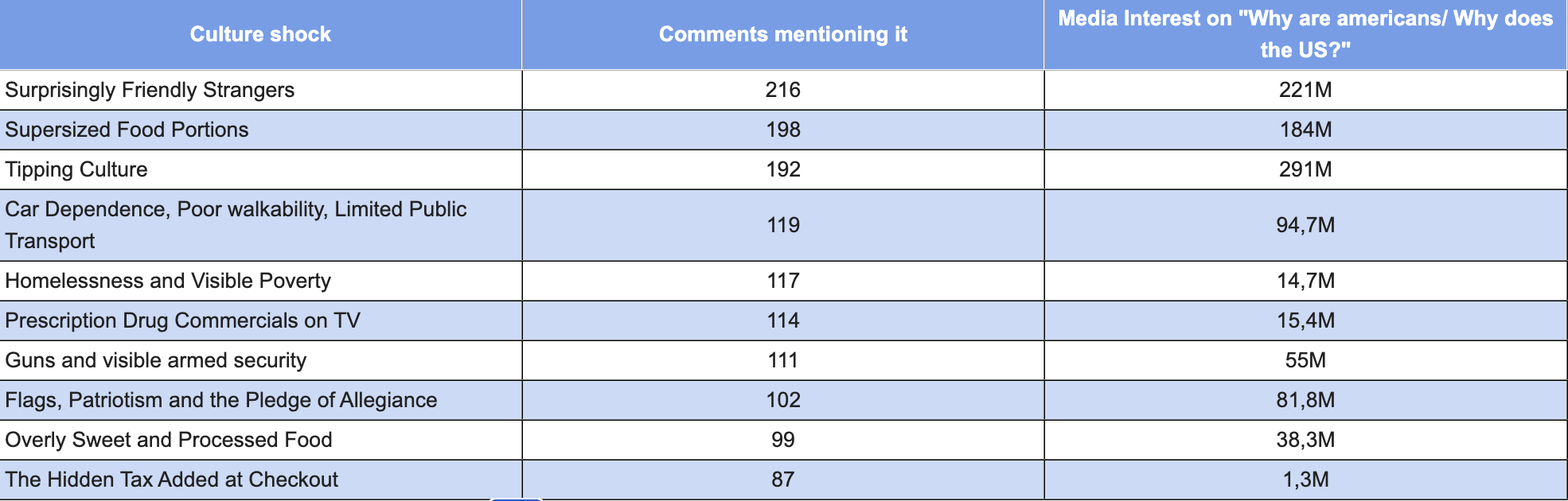
A study conducted by BC Game analyzed international conversations on Reddit to find out what catches foreign visitors off guard the most. The findings offer a fascinating glimpse into cultural perception.
You can access the complete research findings here.
The Unspoken Language of Daily Life
At the top of the list is a quintessential piece of American social etiquette: casual friendliness.
Over 200 Reddit discussions highlighted how confusing American small talk can be for international guests. Asking a stranger "How are you doing?" serves as a standard greeting rather than a literal inquiry about someone's emotional state. To an outsider, this performance can feel oddly theatrical.
Beyond casual greetings, the research outlined several other recurring points of confusion for travelers visiting the US:
Massive Portions: Dining out frequently turns into a multi-day commitment, with many visitors reporting that a single main course easily feeds them for two or three meals.
The Math of Tipping: Unwritten math rules at the end of a meal baffle guests from countries where service charges are included in the bill. Stories even surfaced of confused tourists attempting to tip fast-food cashiers.
Car-Centric Cities: Travelers accustomed to extensive public transit or walkable streets in Europe and Asia are regularly caught off guard by the sheer necessity of driving, even in mid-sized metropolitan areas.
Stark Economic Contrasts: Visible poverty and downtown tent communities in major hubs like Los Angeles and San Francisco present an unexpected reality for people visiting a wealthy nation.
Why Context Matters in Copywriting
As travel writers and content creators, these data points highlight a vital lesson: effective storytelling relies on understanding localized perspective.
Good travel writing goes past describing locations. It translates cultural nuances. What feels like an ordinary cashier interaction to a host can feel like a complex social puzzle to a visitor. When we write about places, capturing these small, everyday friction points is often what makes a narrative resonate with readers.
