Writing for an Audience of One
Every travel article I write has an audience of thousands. Every entry in my son's travel journal has an audience of one. The difference between those two acts has changed how I think about both.
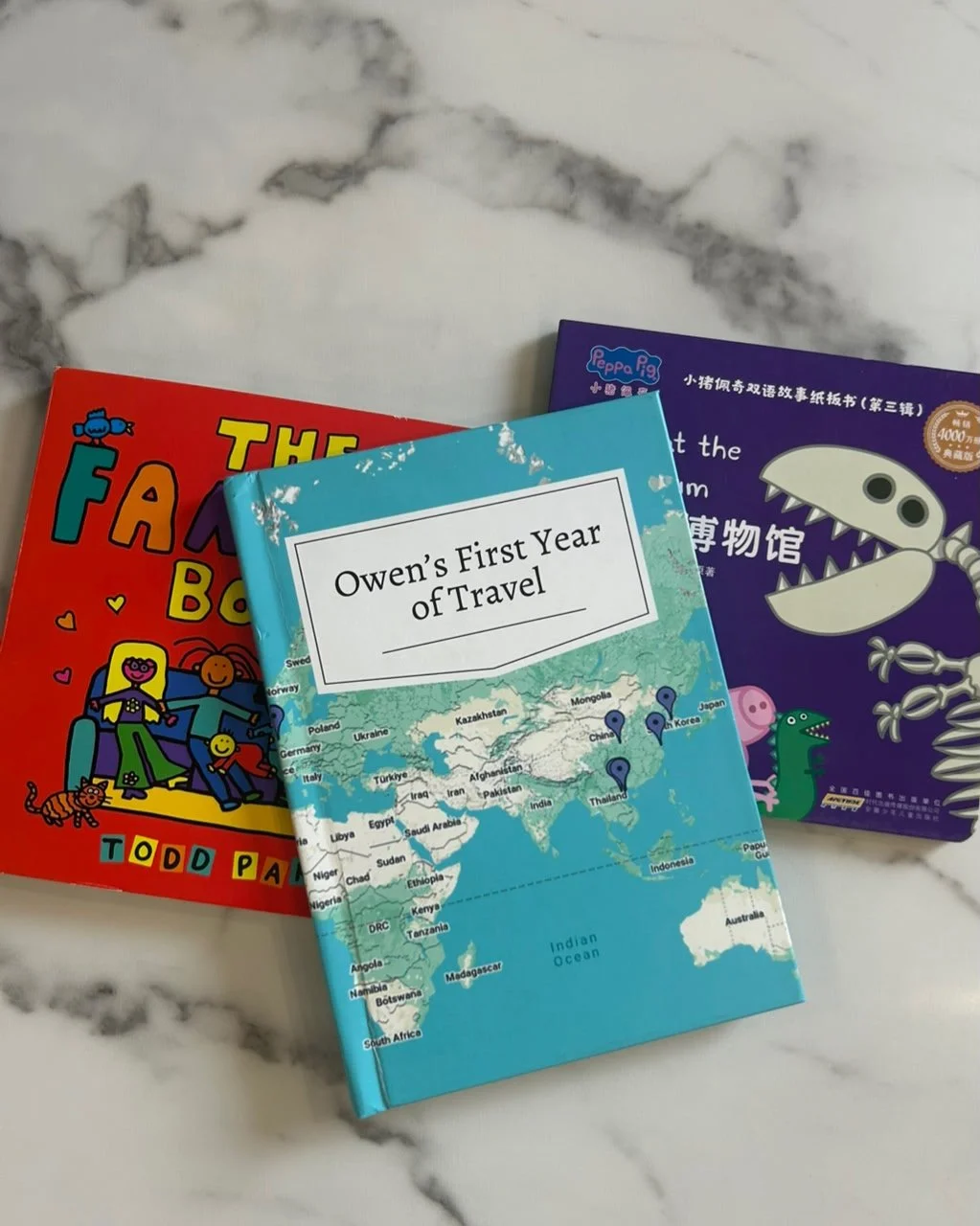
I'm finishing up the second volume of my son's travel journal this week. Year one is already printed and sitting on a shelf. Year two is one entry away from being ready for the printer. I use Travel Diaries, a journaling website where you can write, lay out the pages, add photos, and export a PDF or print it as a book. The only people who will ever see it are my family and friends.
That privacy is the point.
The Details I Actually Remember
In a WorldAtlas article, I might tell you about a town's historic main street or its geographic significance. In my son's journal, I write about the afternoon he saw his first beach. He walked toward the water, felt the first wave hit his ankles, and immediately decided he didn’t like it. That was the whole event. No dramatic sunset. No profound reflection. Just a kid and his first encounter with the ocean, and his very clear opinion about it.
That detail will never make it into a travel article. It has no service value. It won't help anyone plan a trip. But it's the detail I actually remember from that day. The journal forces me to separate what happened from what is marketable. That separation is useful.
The Freedom of No CTA
Professional travel writing has a job. When I edit booking pages for Cookly, every paragraph is designed to move someone closer to a transaction. When I write for a magazine, there's an editor, a word count, a deadline, a keyword strategy. There's always a next step. Book this. Visit that. Read more.
The journal has none of that. No CTA. No affiliate link. No SEO target. No one asking me to pad the piece to hit a metric. I write until the memory feels complete, then I stop. Some entries are two paragraphs. Some are two pages. That freedom is rare, and it reminds me why I started writing about travel in the first place.
What I Leave Out
In a published article, I frame destinations positively. I focus on what's worth seeing, where to eat, why you should go. The journal gets the truth. The articles get the truth, filtered.
I wrote about the afternoon in Harbin when my son had a completely deserved meltdown because it was too cold for him. Not a little cold. Too cold. The kind of cold that makes a toddler cry in a way that is entirely reasonable. That entry is not about Harbin's ice festival or its Russian architecture. It's about the gap between what a place offers and what a three-year-old can handle.
I won't publish that story. But writing it keeps me honest. When I sit down to write a professional piece now, I know what I'm leaving out. I know which details are real and which are performative. That awareness makes my professional writing sharper. I trust myself more because I know where the line is.
The Voice Difference
My son's journal is written in a voice he'd recognize. Short sentences. References to things that happened before he was born. A tone that says, "this is for you, not for everyone."
My professional voice has to be accessible to strangers. But the journal reminds me that the best writing, even public writing, should feel like it's for someone, not for everyone. That's the difference between a generic listicle and a story that makes a reader feel seen.
When I write about returning to Ho Chi Minh City, I'm not writing for "travelers." I'm writing for the person who has also walked past a crumbling building and wondered what was inside. The journal taught me to find one person and write to them.
The Long Game
A WorldAtlas article lives online until the algorithm forgets it. The journal lives on a shelf until my son is forty and finds it in a box. One is built for now, and one is built for later.
Writing for "later" changes your priorities. You choose different details. You care less about what's trending and more about what endures. That perspective seeps into my professional work. I find myself asking: will this detail still matter in five years? If the answer is no, I cut it.
The Only Writing With No Professional Value
The journal is the only travel writing I do that has no professional value. It doesn't build my portfolio. It doesn't attract clients. It doesn't rank on Google. And that's exactly why it has the most professional value.
It keeps me honest about what travel actually is. Not the curated version that shows up on Instagram. Not the optimized version that shows up in search results. The real version. The cold afternoon in Harbin. The first wave that a kid didn't like. The moments that don't convert but do matter.
That's what I'm trying to carry back into the work I get paid for. The hope that somewhere in an article about Portugal's retirement towns, there's a sentence that feels like it was written for one person. Because that's the only kind of writing that ever really works.
