I've held driver's licenses in the United States, Thailand, and Germany. I've driven on highways and back roads in twelve countries across four continents. Every time I get behind the wheel in a new place, I learn the same lesson all over again. The rules are written down, but the real education comes from what no one tells you.
The Written Rules and the Unwritten Ones
In Germany, I didn't have to take a test or complete any instruction to get my license. Texas and Germany have a reciprocal agreement, so I simply switched my license over. That meant I knew the written rules from my American training (supposedly), but I didn't know the unwritten German customs until I was actually on the road. The way you move over for a faster car on the Autobahn isn't in any rulebook, but everyone does it. The way you check your rearview mirror before signaling isn't just polite. It's expected. Germans act differently in a traffic circle than French or British drivers. I had to learn all of it by watching and doing.
Driving in Thailand taught me a different set of unwritten rules. The written rules exist on paper, but the real flow of traffic follows a different logic. Motorcycles weave where cars cannot. A horn doesn't mean anger. It means "I'm here." Learning to drive in Bangkok meant learning to read the room instead of reading the signs.
The same thing happens when I write for a new audience. Every brand has written guidelines somewhere. Tone of voice documents. Brand pillars. Messaging hierarchies. These are the written rules, and they matter. But the real connection happens when you learn the unwritten ones. What does this audience actually expect? What are they tired of hearing? What would surprise them in a good way? You can't get that from a document. You get it from experience.
Adapting Without Thinking
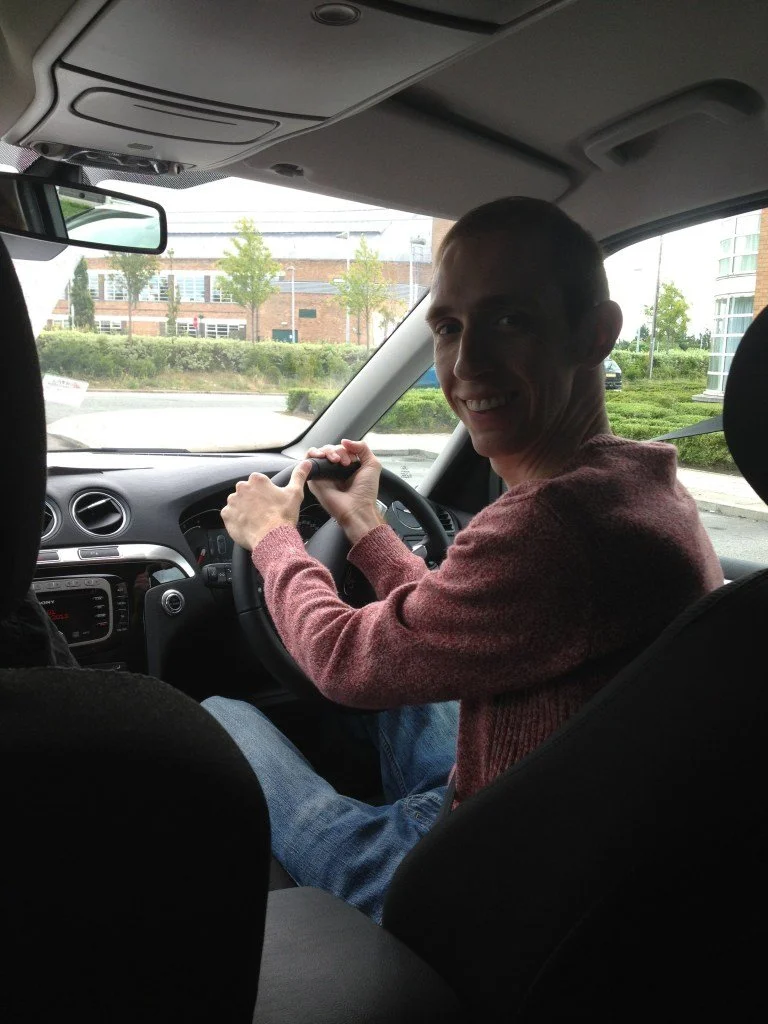
Driving on the right side of the car/left side of the road for the first time. UK, August 2013
Driving in the UK and Ireland meant learning to stay on the left side of the road. The first few minutes were terrifying. Every intersection required conscious thought. Which way do I look? Which lane do I turn into? But after a while, the adaptation became automatic. I stopped thinking about the rules and started just driving.
The same thing happens when I've written enough for a particular audience. The voice stops feeling like a performance and starts feeling natural. I don't have to check the brand guidelines before every sentence. I've internalized the rhythm, the vocabulary, the kinds of jokes that land and the ones that don't. That's the goal of good copy. Not following rules but internalizing them until the writing feels effortless.
What Driving in France and Switzerland Taught Me
French drivers are aggressive in a way that feels personal until you realize it isn't. The honk isn't about you. It's about the situation. Swiss drivers are aggressive in a completely different way. They follow the rules strictly and expect everyone else to do the same. A French driver honks because you're in the way. A Swiss driver honks because you've violated a rule.
Audiences are the same. Two different groups might both be skeptical, but their skepticism comes from different places. One audience needs more data. Another audience needs more social proof. One audience responds to direct claims. Another needs to be led there indirectly. Learning to drive in different countries taught me to watch for those differences instead of assuming everyone works the same way.
Getting the License vs. Learning the Road
Switching my Texas license for a German one was easy. Paperwork and a fee. That's it. But learning to actually drive in Germany took months of paying attention, making mistakes, and adjusting. The license got me on the road. The experience taught me how to stay there.
Copywriting has the same gap between credentials and capability. You can learn the principles from a course or a book. You can list the right software on your resume. But you don't really learn to write for an audience until you're in the car alone, the cursor is blinking, and the reader is waiting. That's where the real education happens.
I specialize in travel copywriting for tourism brands, OTAs, and hospitality companies. If you need a writer with firsthand experience in destinations around the world, view my portfolio or reach out.